Hydro Building
Exterior/Facade & MEP System Design
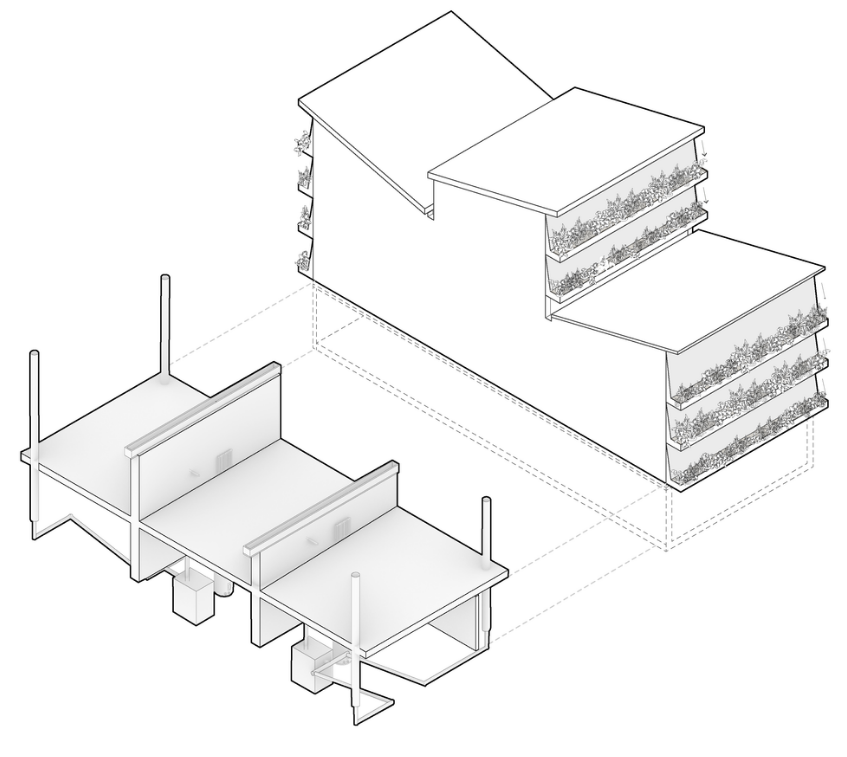
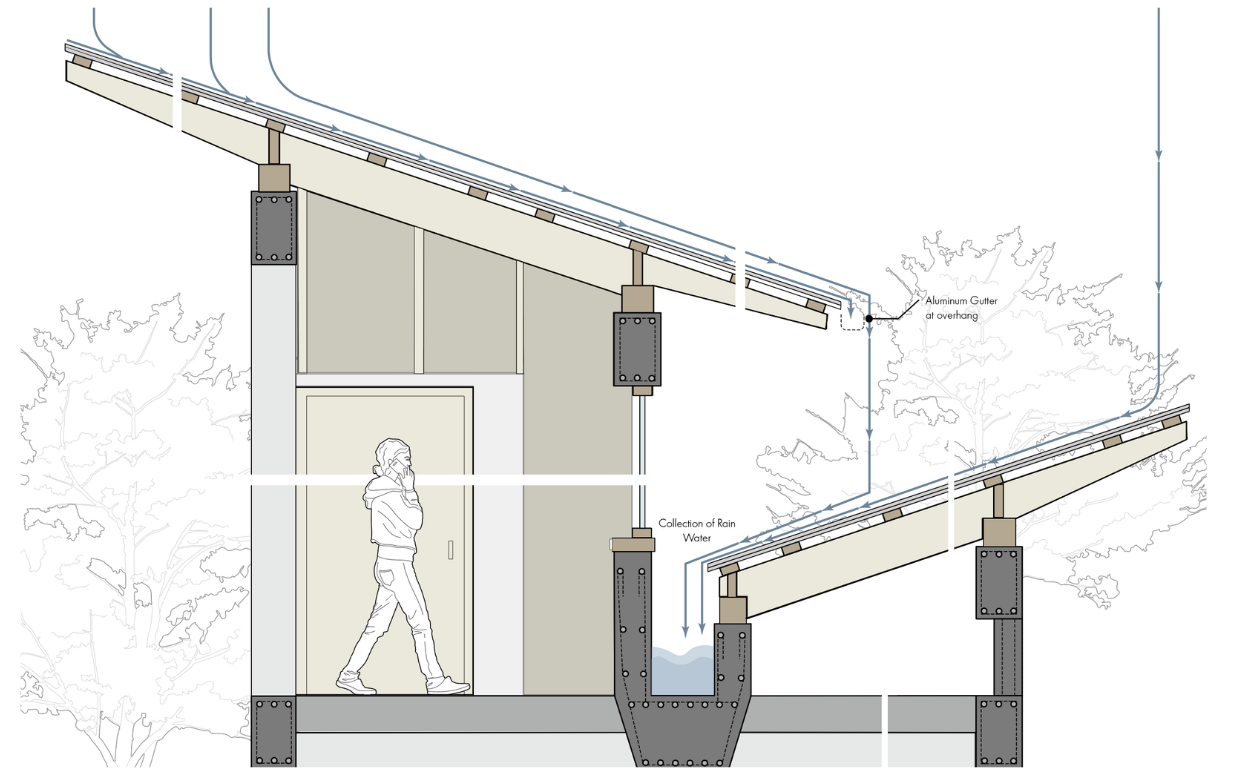
This house features a water wall façade that captures and filters stormwater to reduce pollution, supplies gray water to storage tubes and radiators for thermal regulation, and directs water to irrigate façade planters and flush toilets.
Located in London, where frequent rainfall and below-comfort-level temperature and humidity are common, the building’s façade responds to the city’s struggle with climate change by actively filtering and managing day to day precipitation as well as stormwater to enhance environmental resilience.
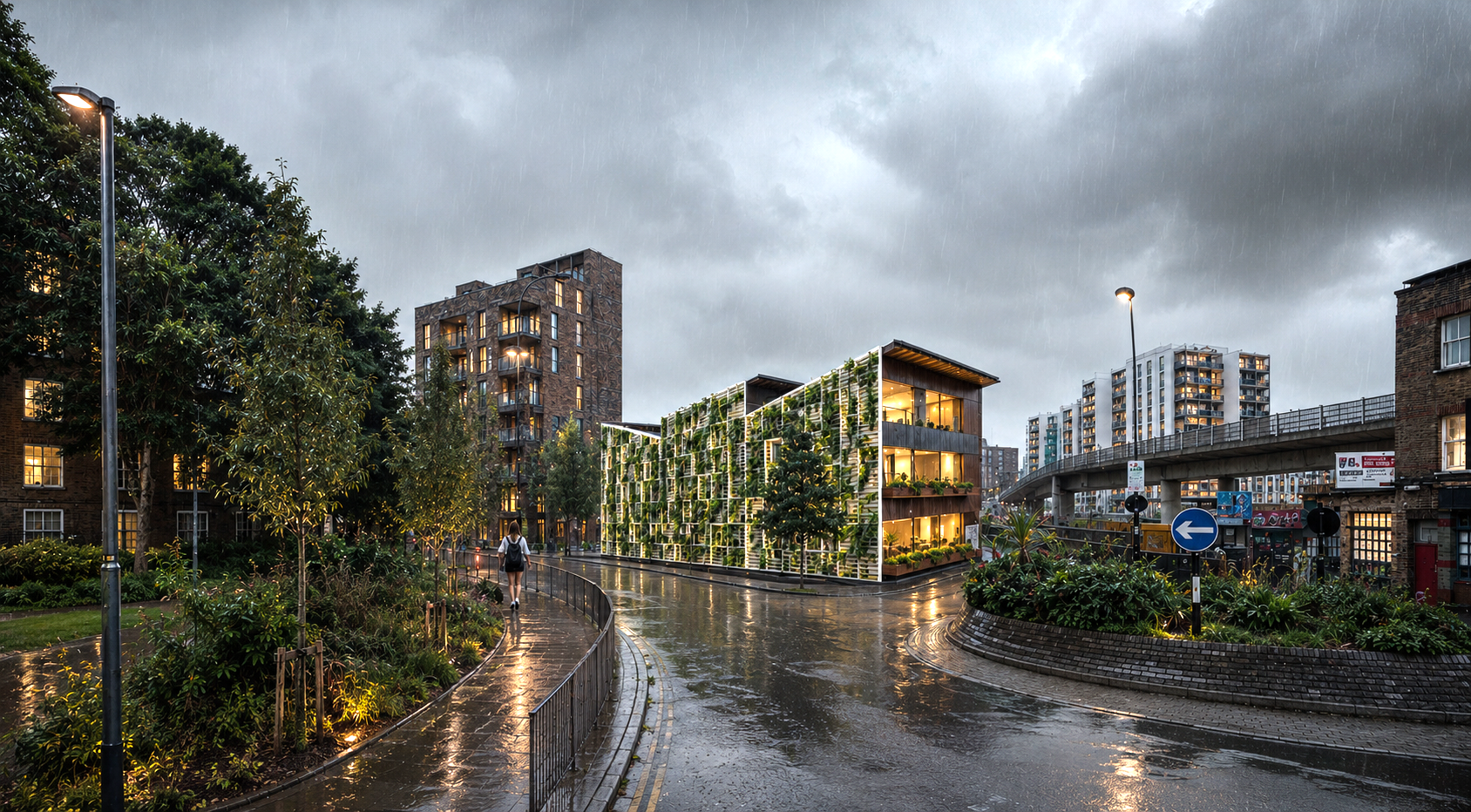
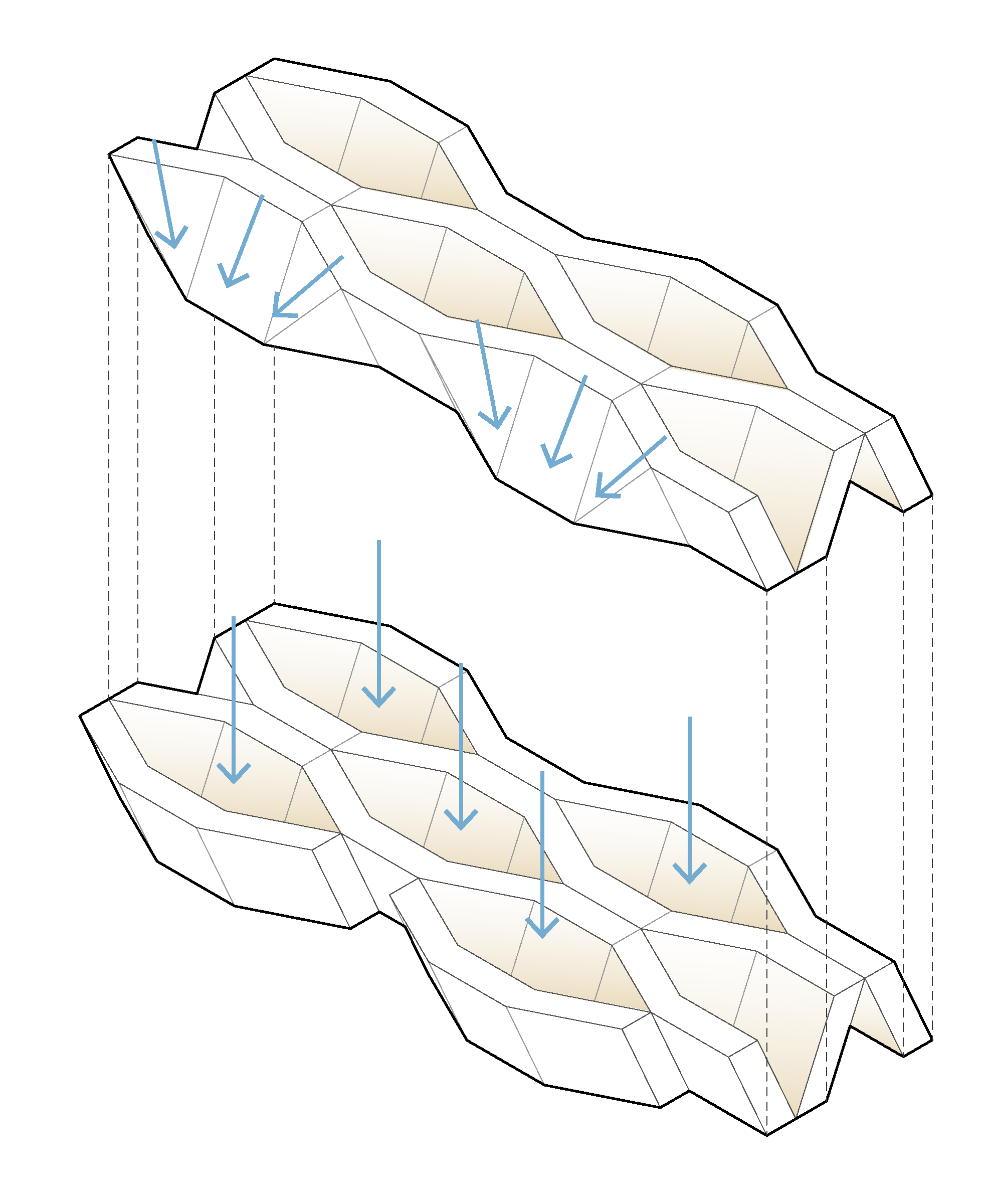
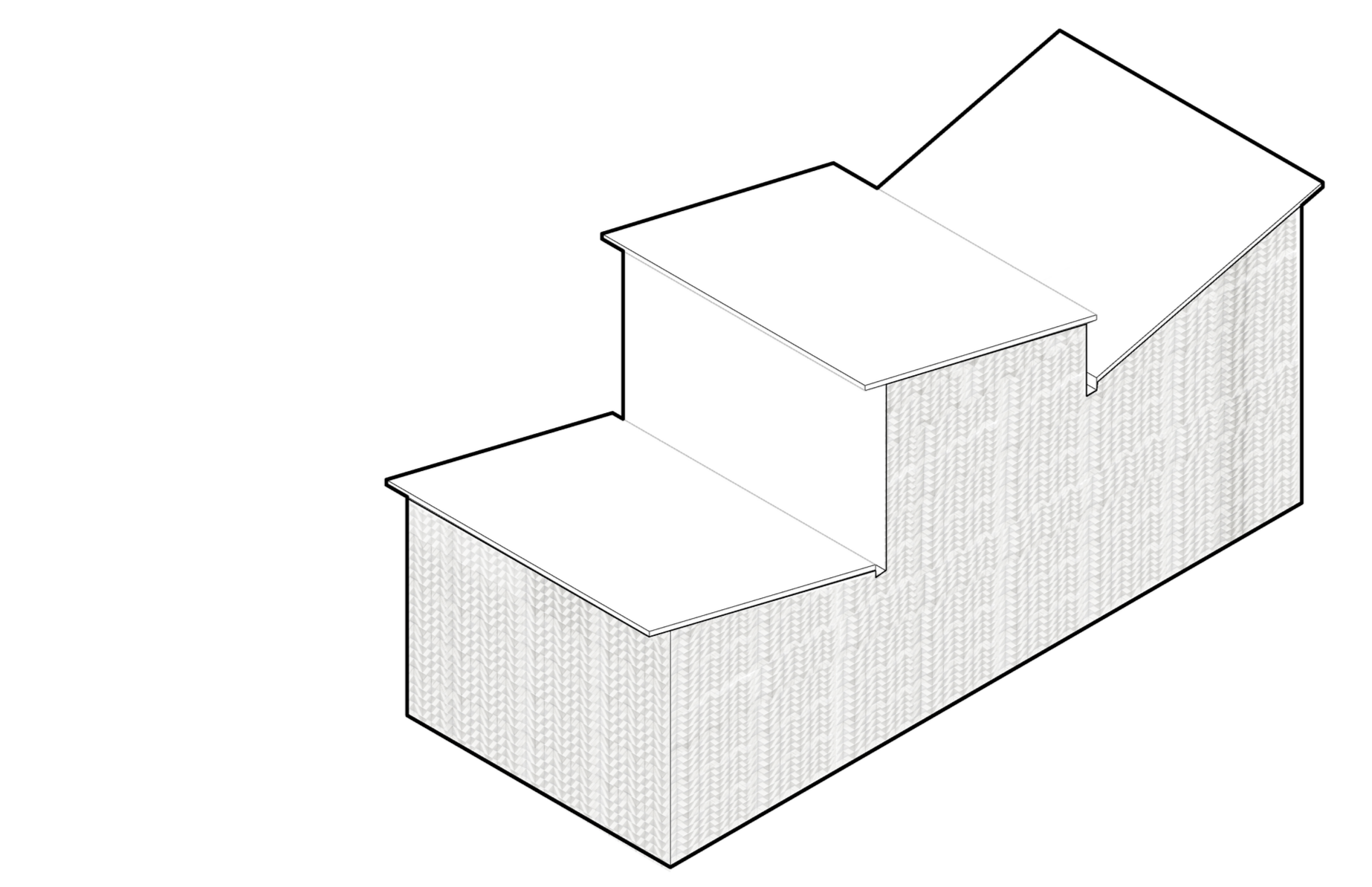
The building responds directly to London’s wet climate by transforming rainfall from a challenge into a resource. Rather than treating stormwater as waste, the building is conceived as a water-harvesting system that captures, stores, filters, and reuses rainwater throughout its lifecycle. The slanted roof forms and stepped massing encourage water to flow downward through the building, where it can be collected and directed into storage systems. This approach addresses the increasing frequency of heavy rainfall and urban flooding in London while reducing pressure on the city’s aging drainage infrastructure.
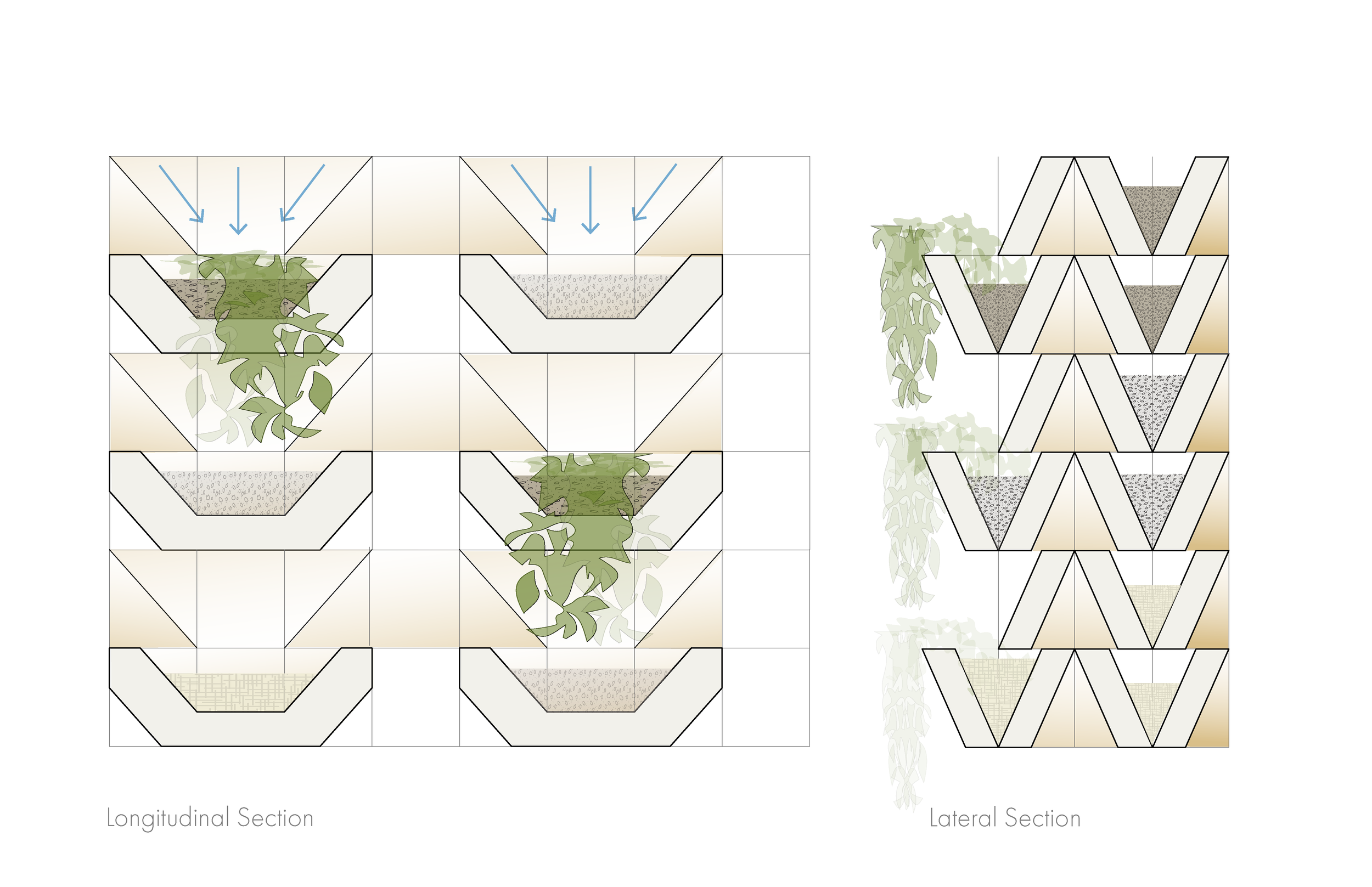
A key architectural feature of the proposal is its hydroponic living façade, which functions as both an environmental system and a visual identity for the building. Drawing inspiration from precedents such as water-filtering façades and living wall systems, the façade uses captured rainwater and treated greywater to irrigate integrated planters. These vegetated surfaces help filter pollutants, improve air quality, provide natural shading, and reduce heat gain during warmer months. At the same time, the greenery creates a constantly evolving façade that reflects London’s seasonal changes and demonstrates the building’s relationship with water and climate.
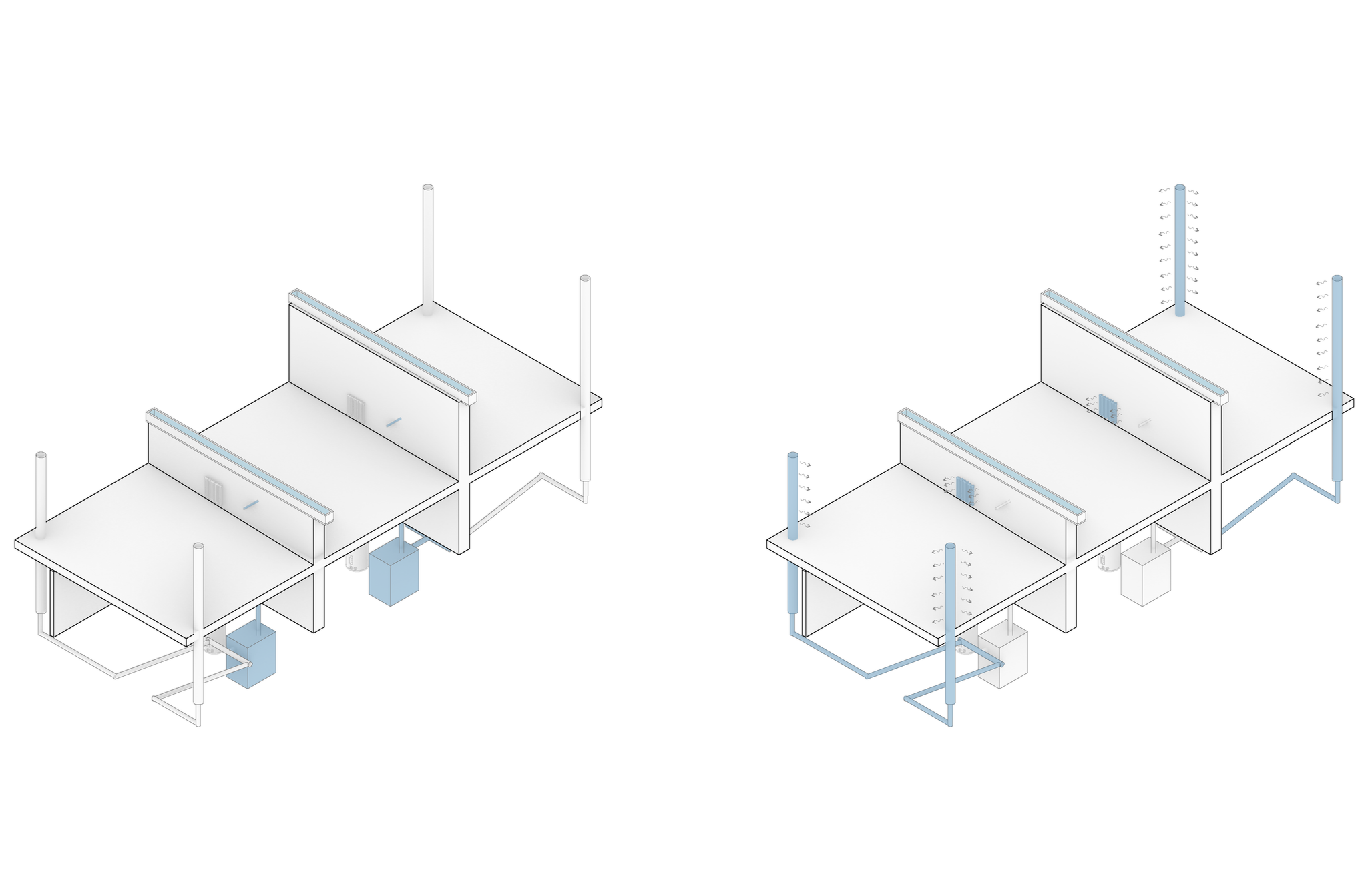
The design also incorporates passive environmental strategies to improve thermal comfort in London’s predominantly cool and damp climate. Research within the project identified that much of the year falls below the comfort temperature range, leading to a focus on heating and humidity regulation. Large glazed openings on key façades maximize passive solar gain, while internal concrete slabs and cylindrical water-storage elements act as thermal mass, absorbing and slowly releasing heat. Plant-based shading systems further moderate solar exposure.
Research Based Design
Inspired by biomimicry and innovative water-management precedents, the building demonstrates how architecture can actively engage with its environment rather than resist it. Concepts such as rainwater harvesting, greywater recycling, smart water storage, and climate-responsive façades are integrated into a cohesive design strategy.
Translating Concept to Urban Landscape
The result is a three-story community-focused building that not only responds to London’s rainfall and humidity but also showcases sustainable water practices through its form, façade, and environmental systems. By making water visible within the architecture, the project educates occupants about resource conservation while creating an aesthetically distinctive and environmentally resilient landmark.
Aggregate Filtration
The layered aggregate filtration system uses different sizes of stone and gravel to progressively remove sediments, pollutants, and impurities from collected rainwater before it is reused within the building.
Angled Butterfly Roof
The slanted roof geometry is designed to maximize rainwater collection by directing precipitation efficiently toward storage and filtration systems while expressing the movement of water through the architecture.